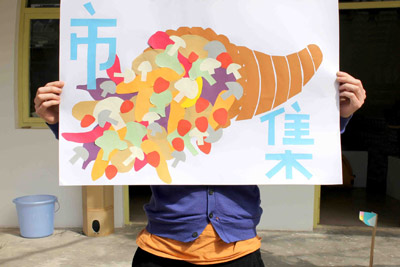

吃得太多,消化需要时间,请耐心等待网站加载... This website arrives slowly and encourages patient exploration...by Orianna Cacchione
时间 posted on: 28 January 2012 |
发布者 author: michael eddy |
评论 comment (0) |
分类 filed under: deconstruction, 姜 ginger, 展览 exhibition, 春节 spring festival, 茶 tea, 西格蒙德·弗洛伊德 Sigmund Freud, 食物 food制作已花费了很长时间,我们一直在努力将已有的资源整合并分享,现在是收获的季节 啦:
www.homeshop.org.cn 或者 www.homeshopbeijing.org 。
由于网站包含众多内容,访问时请耐心等待…
点击链接访问家作坊的新网站之后,您可在四周活动一圈,做下伸展运动或者泡杯茶,网站正在加载中——慢工出细活——需要时间…
最后,站在兔年的尾巴上,家作坊祝大家龙年“张牙舞爪”!
It’s been a long time in the making, but here we are, an attempt to gather together and share some of what we do:
www.homeshop.org.cn or www.homeshopbeijing.org.
There’s a lot of space in-between; please visit and stick around…
Go ahead and click on the link to visit HomeShop’s brand new website, then take a small walk around the room, do some stretching exercises or make tea; this website is a work-in-progress, and—like all good things—takes time…
But don’t let that stop us from multi-tasking——Michael, 何颖雅 Elaine, Fotini, 欧阳潇 Xiao, 曲一箴 Twist, 植村 絵美 Emi and 王尘尘 Cici at HomeShop wish you all fierce flights and a happy Dragon year.
时间 posted on: 22 January 2012 |
发布者 author: 家作坊 HomeShop |
评论 comment (0) |
分类 filed under: dragons, 交流 communication, 定位 mapping, 网络 network, 设计 design, 跟踪 tracing
(非常感谢高源翻译的英文原版 Chinese translation of the original post in English thanks to 高源鸿!!! 谢谢!!!
几个月之前,有位在2011光州设计双年展(主题为图可图非常图)非定名设计单元工作的朋友介绍了几位她的同事给我认识。他们在对祭奠用品进行研究, 大概这些用品是他们非定名设计的研究对象。我的朋友知道,我在和附近寿衣店的邻居有交流,制作了一些纸质物件,所以她研究祭奠用品的这几个同事想知道,这些店在哪儿。我给他们发了几张我制作的纸件和研究的照片,但其实我都没有给寿衣店内部拍过照。不过,我确实故意没告诉他们这些店的具体位置(其实就在我们工作室的正对面)。
这听着有点傻,但是我想声明一下,我这么做并不是因为想独占我周边的文化资源。我只是想研究这些小店同时不影响它们的真实性。这些小店从一开始,就笼罩在一片神秘之中。一年之前,我们在准备北二条小报第一期的时候,老萧和我特地去和问过开寿衣店的山东母子,要不要在我们的报纸上打个免费广告。两人拒绝了我们的提议,理由是做这种“迷信”的广告是不吉利的。政府对这种迷信产业进行着严格的监管,而同时又垄断着殡葬业。比如, 从我们对门邻居店里购买的骨灰盒,是不能进入公墓的,因为我们的邻居没有官方的批准。我想,这可能和他们本身不稳定的处境有关。他们在回答问题时,彬彬有礼而小心谨慎。所以,我们写了一篇短文,发在北二条小报上,仅向英语读者介绍这一现象。
不过,这篇短文的标题上用中文写了“寿衣”二字。所以在我们这份杂七杂八的报纸创刊号发行的第二天,就遭到了一些邻居的责怪,认为我们不应该提及这方面的内容。从他们的反应当中我感受到的是,不仅对门寿衣店与政府的关系难以说清,连关于人们离世后的仪式也是不可轻启的话题。
11月的时候,我们看了Brendan McGetrick的演讲,他本人是“未定名设计”的馆长之一。他以让人耳目一新的方式,向我们呈现出了各种创意与作品。他运用简单质朴的日常物件,科技产品,甚至社会现象来扩展设计的定义。比如:“政治抗议手册,DNA条码,死刑执行程序,跨洲货币体系”等等。那么这些如何成为设计的范例呢?McGetrick写到:“本次展会的目的,就是对“设计”进行重新的定义。设计是满足人类需求的各种战略解决方案,不是艺术家为了标榜自我而造出的主观产物”。
祭奠用品的设计可谓是McGetrick理念的反义词。这些用品悉数列举了日常生活的所有物件,通常涵盖我们文化当中的奢侈商品,比如:钱、汽车、高档衣服、手机和大楼。这些用品并非照搬物品原来的样子 ,也不是按照“山寨”的理念进行的。在某种程度上说,山寨好于原装产品,有的时候山寨机还会微妙而幽默地改变原机的功能。决定祭奠用品的外形的还有另外一个实际原因:为了便于焚烧,它们是用纸做的。因为这样的最终目的,设计当中的其他元素往往不被考虑在内。制造材料一定要能够充分燃烧,这样才能尽快进入地府——虽然几乎任何材料都是可燃的。曾几何时,人们在提供祭品的时候更加慷慨。但现在人们有着当代的理解,往往选择更普通的方式祭奠过世的爱人或祖先。 现在人人都可进行祭奠活动,所以祭奠也变得不在神圣,趋于理性。但是毕竟,相比于Georges Bataille提出的,用文字寄托哀思,或Jacques Attali倡导的,寄悲情于当代音乐,烧纸钱、烧祭物,显然还是更加直接的祭奠方式。然而这些用品必须做到能物尽其用同时价格低廉。所以,与现代社会的其他产品一样,祭奠用品也是大规模的现成制品。一套九件的祭奠品仅售15元。如果钱不是问题的话,还可以定做娃娃屋大小的别墅,或者等离子电视。在北京的小店里你可以在列着上百条物件的清单上订货,然后河北的制造者就会发货过来。不过,一般来说,卖的最好的还是成捆的通胀率极高的冥币,价格十分公道。
但是让我不解的是,如果祭奠用品的意义在于让死者在地府活得体面,那为什么还用最便宜的材料给他们做各种物件的复制品呢?是因为在这“纯粹的交换”中,最普通的商品,也是最合适的替代品吗?如果可以用仿冒品的话(比如,生前死后都可使用的双SIM卡手机;印着玉皇大帝的冥币),那么为什么还要买那些卖家的赝品,而不去自己制作一些适合自己情况和价值观的用品呢?这样不是能更好的阐释我们去已故亲人的关系吗?
带着这些想法,我自己制作了一些纸件并拿到对门的寿衣店,想知道能不能卖出去。我们的邻居并不吝惜对设计本身的评价,却坦承觉得这卖不出去。我向他们说明,他们可以自己定价,卖出去的钱完全归他们所有,他们也不断地问是否真的不需要给我任何钱。我唯一的要求就是请他们告诉我人们的反应。在我们的坚持下,他们同意拿几个看看。我本以为,手工制作可能对人们更有吸引力。然而店主却说,有人倒是买了一件,不管是以什么价格出售的,此人却打算留着我做的纸件而不是用于焚烧。这对我来说有些有趣,也有些让人失望。这并不是我的预期目标,也不是我最初保密的目的。不管怎么说,我还是觉得有机会的:接下来的几周,我路过对门,发现我的彩色小车摆在他们的玻璃柜台里。过了一段时间小车不见了,我却知道原因不是卖出去了。他们就是无法再忍受我的掺合,不想摆在柜台里了。而我们也觉得很尴尬,不敢旧事重提。
对亡者的纪念全世界都有,而我所知的祭奠方式相较这种简单很多。对很多人来说,谈到死亡,往往会谈宗教;而不信教的人,在说到死亡的时候,也会谈谈宗教,因为,没人谁真的知道死亡是怎样的一种体验,只能通过宗教来解释。我还记得参加过的几次亲戚的葬礼,感觉与其他重要场合没有什么特别大的区别,只是气氛凝重些。有的人相信天堂,我并不相信。在这点上,我与很多人包括亲属朋友是不同的。(我母亲是犹太人,她的文化身份可能更明显,而我其他亲戚的观点更集中于现世,引用我一个叔叔Alex在邮件中的原话,他说“等到陨石撞了地球,一切灰飞烟灭,一切都是浮云”)。如果说我们这个例子里,还依稀可见传统的影子的话,那么最多也只是说,这些传统时不时的扰乱了迥然不同的生活。
从某种程度上说,对死者的纪念,是人们用一种宗教,或者文化的方式,对抗着对于当代社会(流于物质)的失望,这种设计,可以说是存在于我们的内心深处根深蒂固的本能,或至少是,一种行之有效的对抗方式。牧师的动作,犹太拉比的语言或者在街边烧纸钱妇女的做法在一定意义上都是他们所在的环境的设计。而对于烧纸钱的妇女来说,这种设计其实是以象征的方式,重新构建了中国传统家庭相互依靠的体系,而让这些理念不因生命的终止而结束。但其实,即使焚烧的物件可能会变,这种习俗仍是在试图同精神世界建立一种连接,虽然表现形式是物质的,但实质并不全是。
我是站在一个不了解内情的人的角度上发表的观点,很难深入从人类学、社会学或宗教理论上进行分析。也就是在此,理论和信仰似乎分裂成了自相矛盾的境地。如果我们对待鬼魂的方式如此功利,我们如何能够真正进入灵魂的世界呢?带着这样的问题,我不禁自忖,是否现在已为时太晚?围绕真正的信仰问题,各种阐释与误解将我们对待灵魂的方式定调为艺术,但何为真相,何为误解,我们的路程在发现与怀疑的相反方向上,渐行渐远。毕竟,扪心自问,我们能说,扫墓者在祭奠先人时,所希望获得的,也是我们所期待的这种近距离的心灵体验吗?这些纪念本身是否已经稀释成了一种约定俗成的仪式?那么,个人与习俗的真正关系又是什么呢,我作为外来者是否就本不应该介入呢?
我们周边其实有很多家寿衣店。我决定去接触临近医院的一家更为“正规”的寿衣店。和我家附近的几家寿衣店差不多,这家店也是24小时开放的。毕竟,当生命走到尽头的时候,说不好什么时候,寿衣就派上用场了。一个晚上,我和陈陈一起去了这家寿衣店,他们比我想象的更愿意谈这个话题,我本以为他们会对此缄默无言。与我交谈的女士不认为寿衣店有任何不同,她也不认为所谓的私人处购买骨灰盒不可进入公墓的说法是真的。她给出的理由是,我邻居不像他们是本地人,入行时间短,所以在与当地顾客交谈时更为敏感。这位女士还对我拿去的纸件做出了批评意见。一个星期后我拿着改进过的纸件又去找她,这次纸件上有了手绘的细节。她问我,其他的像冰箱、洗衣机、衣柜床的物件在什么地方。正是她的态度导致了我的变节,让我觉得,之前的谨慎低调都是不必要的。祭奠,本是很个人的行为;但若仅仅因为质疑这一活动的纯粹性,便以此为题,公开讨论,是会让人感觉,多少有些尴尬。(你真相信灵魂吗?)说实话,对于这一精神世界的论断,我们无可稽考;而未来人们将以何种方式祭奠先人,我们也不得而知。我们把一种行为冠以“设计”之名的那一刻,其实就已经表明,这已不再是种信仰。因为,我们看到的,不再是真相,而是某个具体的物件,被赋予了具体的用途,被视作为满足人类需求而设计的一整套战略解决方案。这不禁让我想起了Vilem Flusser的名言:“设计者都是攻于心计,巧设陷阱的算计者。但如果通过讨论,我们可以获得另外一个视角,学会在思考的时候,不只局限于融合、利用、或强行引入某种文化元素,那么,也许在这时,我们可以说,自己真正实现了外国习俗与自身艺术的水乳交融。艺术作品不是人类征服精神世界的工具;不是对逝者简单粗暴的讽刺;相反,艺术作品可以是纯粹的;但真正的艺术来不得半点匆忙。
时间 posted on: 13 January 2012 |
发布者 author: michael eddy |
Comment (1) |
分类 filed under: sacrifice, traffic, 交流 communication, 北二条小报 Beiertiao Leaks, 寿衣, 文化交流 cultural exchange, 纸 paper, 艺术 art, 设计 design, 邂逅 encounters, 项目 project
location: “中国箱包之都 China Luggage & Bag Capital”
河北省保定市白沟工业城
Baigou Industrial City, Baoding, Hebei Province
date: 5-6 January 2012
It is said that Beijingers’ vicinity to the imperial seat (both past and, ahem…present) means that they don’t know much about how to really do anything, as serving the government—or at least falling heavily shadowed in its midst—means that you do not really have to make your own living, nor can you cheat too far astray from the one that’s been allotted to you (think, in contrast, of those wild rebel producers in Guangdong [2]). The Beijinger’s belly is big, it’s got swagger like that and stands for a certain slow pace of life unlike the typical notion of an urban persona. So where we had previously held some romantic vision of an action-packed urban exploration, venturing out again this winter we realise that such adventure has less to do with sleek and agile black-clad intrigue than a questioning of what the making of urbanity really means here in Beijing, the capital city of not-knowing-how-to-do-much.

A visit to a friend of QU’s luggage and bag factory was compelled by curiosity and surprise, for such industrial production in Beijing is rare, but what we thought would be the outskirts of Beijing turned out to be Hebei province, surrounding Beijing on all sides like a seventh or eighth ring, traceable by desolate farmlands, landfills and, yes… production. 白沟镇 Baigou village, approximately three and a half hours from HomeShop by bus or subway and long-distance coach, once fell under the jurisdiction of 高碑店市 Gaobeidian city (not to be confused with the 高碑店 Gaobeidian of fake antique furniture fame in eastern Beijing), but for some unknown reason has in latter years been re-territorialised as part of the 保定市 Baoding municipality, a city historically well-known for being a site of minor victory over the Japanese during the occupation in the 30s. Baigou was in fact once called 白狗, but this unflattering name (meaning “white dog”) was later changed to 白沟, and from the trenches of this small village farmers were engaged as early as the 70s in 副业 sideline work in bag manufacturing as part of the communists’ organising of 生产队 production units across the country.

LIU Lei’s mother can still remember the time when her family grew vegetables on their land, but she says that by the time of the reform and opening up at the end of the decade many farms already sat fallow as the shift from farmer to manufacturer grew, like the design of fashionable bags, more and more intense. There is perhaps a mutual feeling of 没办法 for those farmers who leave their land to make better fortunes as businessmen and migrant workers (“如果没土地了,怎么办?开三轮,开小商店,你什么能力都没有只能打工咯,没办法 Without land, what are you supposed to do? Drive a motor-taxi, open a small shop, or if you don’t have any skills whatsoever you can only be a laborer, what other way is there?”), and those who are forcibly evicted by developers with petty compensation (“一千一亩就等于抢走的 1,000 yuan per mu is basically like being robbed”), but at the end of a long description of a violent protest incident in Baoding last summer, where around 1,000 farmers occupied a highway in protest of unfair compensation for their land (“你能怎么地?上访?你走不出保定,走不出河北,更到不了北京。 What are you gonna do? Make appeals to authorities? You won’t be able to get past Baoding [municipality], you won’t get to Hebei [provincial authoritiy], and don’t even think about Beijing.”), LIU Lei’s father cannot help but smile embarrassedly that their family’s luggage and bag factory has benefited from the state-directed urbanisation of Baigou. Family-run production units-cum-full-fledged businesses grew steadily in the 80s, and LIU Lei’s family joined mid-decade with her mother and father making bags themselves and other relatives in the family traveling as far as Sichuan to sell their ready-made stock. The conglomerated efforts of the families of Baigou (majority Han Chinese with a large population of 回族 Hui minority peoples) began to attract tradesmen to the village itself, and the LIU family no longer had to travel; their bags sold quickly from the aluminum rack stands they set up in the village market.
With support from continued urban development initiatives like the 白沟新城经济社会发展居 Baigou New City Socio-Economic Development Bureau and the 保定白沟箱包产业生产力促进中心 Baoding Baigou Luggage and Bag Industry Productive Force Promotion Center, Baigou has risen to become Hebei province’s only nationally supported and monitored economic zone, with factories like that of the LIU’s producing around 1,000+ bags daily. Supported by the labour of between 70 and 100 employees from neighboring provinces like Henan and Gansu, the 2-story factory the LIU family built on land they purchased from a developer for approximately 100,000 yuan/mu (1/6 of an acre) has now been renovated with an additional floor of worker dormitories, and the price of the land has jumped to 4 or 500,000 yuan/mu. Whilst the real estate bubble is finally finding its friction in the mega-cities of Beijing or Shanghai, it is clear to LIU Lei’s family that there is still a lot more room to grow in Baigou. Keen city-developer relationships keep the dust flying under the many cranes that hang over the landscape, and the influx of new residents and labourers from other areas pumps the village population from 100,000 to 4 or 500,000. 22 year-old LIU Lei’s web savvy and English abilities give the Honghaitang company a whole new sphere of possibility, and supported by the government’s sponsorship of half of their Alibaba membership fees, a single family in Baigou is able to place itself on an international map of production and consumption.

Where geographers define urban construction as “the key mechanism of local state building” [3], LIU Lei’s father says simply, “发展的意思就是盖一个楼 Development here just means building a building“, and their factory is the most concrete evidence of it. But what we must consider here are the complex forces that push a “state-led urbanisation” into a very real dynamic with the local level, whether that be through the fist of 城管 chéngguăn bullying farmers from their land or local families joining together to purchase land instead of buying from 外地 wàidì developers. As such, territorial strategies occur both top-down and from the ground-up, “as much a tool of resistance as of dominance.” [4]
No conclusions yet… to be continued.
城市探索与发现(第三期),是一通过短途漂移和旅行摸索城市化进程的持续性项目。有意参与未来小旅行者(提供路线或参与旅行均可),请联系lianxi[at]homeshop[dot]org[dot]cn.
This is urban exploration number three, part of what will be a continuing series of minor drifts and journeys into the making of the city. If you are interested to join future outings or have suggestions for one, please send a note of interest to lianxi[at]homeshop[dot]org[dot]cn.
时间 posted on: 9 January 2012 |
发布者 author: e |
评论 comment (0) |
分类 filed under: 城市 urban, 定位 mapping, 微观政治 micropolitics


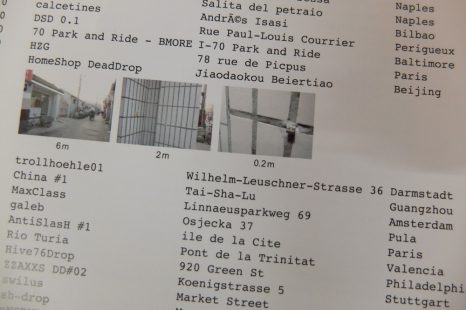
Can you identify which pictures are from Dalian and which are from Beiertiao?
你能分辨哪些来自大连,哪些来自北二条吗?
时间 posted on: 9 January 2012 |
发布者 author: michael eddy |
Comments (3) |
分类 filed under: DIY, 东北 DongBei, 大连 Dalian, 材料 materials, 水平 horizontal, 耕种 farming, 设计 designSeveral months ago a friend working for the “Un-Named Design” section of the 2011 Gwangju Design Biennale (titled “Design is not Design is Design”) put me in touch with some of her colleagues researching paraphernalia associated with death rituals, presumably as examples of un-named design. My friend was aware of the paper objects I have been making in dialogue with the neighborhood Shouyi, so the researchers asked where they could find these shops. I sent them some images of my objects and research, as I hadn’t even taken images of the insides of the Shouyi stores. But I deliberately refrained from telling them where our neighbors’ store is (it’s directly across from us in the alleyway).

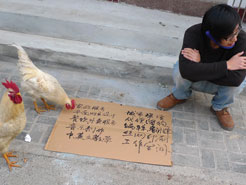
In the summer one of our turtles stopped moving. We buried its body under the shrub by the gates. 夏天的时候,我们养的四只乌龟中有一只死了,我们将它埋在门口的灌木丛里。
This sounds silly now, but in my defense, I swear it wasn’t because I wanted to be the only cultural poacher in the neighborhood. I was simply trying to remain as true as possible to the subject I am following, which from the outset of my acquaintance seemed shrouded in secrecy. When we were preparing the first Beiertiao Leaks a year ago, Xiao and I went over to ask if the Shandong-bred mother-son business team living and working there would place an advertisement free-of-charge in our small newspaper. They refused on the grounds that it was bad luck to publicize as a profession dealing in “superstition.” They didn’t want publicity and wouldn’t allow any pictures or direct mentions of their store printed. Being a sector based on spirituality and superstition, it is kept a close eye on by authorities, and we were told that the government has a monopoly on the funerary industry. Apparently, if one were to buy an urn from our neighbors, it couldn’t be buried in an official cemetery, as they aren’t officially sanctioned. We suspected part of the issue was the instability of their own personal situation. They cagily but politely answered our inquiries, though, so we prepared a short article introducing the phenomenon only to the English-speaking readership.
The title of this brief piece had the Chinese characters “寿衣“ in it though, so the day after distributing the scrappy new copies of the first edition of Beiertiao Leaks we received reprimands from some of the neighbors for even broaching the subject. It seemed from their reactions that, aside from this little shop’s ambiguous relation to the state, as an area of human activity addressing the mysteries of what happens after you die, one shouldn’t speak openly about these rituals.

We had never given it a name, so in order to wish it well, we decided on one: 龟龟 (Gui Gui). 我们的乌龟生前没有名字,但为了祝福它,我们决定叫它龟龟。
Watching a presentation in November by Brendan McGetrick, one of the curators of “Un-Named Design,” we saw an inspiring methodology in organizing a wide range of ideas and artifacts. Toward this, there was a thoughtful attempt to broaden the definition of design to examples of rustic and simple but effective uses of everyday items, scientific innovations and even protocols of action and social situations: “a political protest manual, DNA barcodes, execution procedures, a transcontinental monetary system.” So what made these diverse examples design? McGetrick wrote: “The goal of this theme is to reframe design as a set of strategic solutions to human needs, rather than an ego-driven pursuit of subjective beauty.”
Shouyi goods draw from the design world in the most flagrant sense that McGetrick was reacting against, as they itemize the essential commodities of our lives, and more often consist of the most luxurious fetishes that our cultures share, like money, cars, fancy clothes, mobile phones, and mansions. Their production process rarely results in direct copies, of course. Neither are they really intended to function like shanzhai products, which are in a sense copies better than the original, though they often include subtle and sometimes humorous twists and references to their repurposing. A simple question of materiality determines the boxy appearance of Shouyi goods: they are made of paper and intended to be burnt. The indifference of fire determines a certain indifference of production where other definitions of design come in. The material must adequately combust, thereby expeditiously crossing from the world of the living to that of the dead—but almost anything burns. Having understood this in a peculiarly modern sense, as compared with the more elaborate offerings and sacrifices of bygone times, many people normally opt for rather indifferent forms of tribute to their deceased loved ones or ancestors. The modern sense of sacrifice is that with its democratization has come its effective desacralization and rationalization. However, the ritual of burning Shouyi goods is obviously intended more directly as sacrifice than its substitution with literature (Georges Bataille) or its resonance in all modern music forms (Jacques Attali). It fulfills its function but it must be cheap. Therefore, like all aspects of the modern world, it is conventionally mass-produced and readymade. An average full household set of the nine necessary amenities costs only 15 yuan. If money is no object, one can order the larger dollhouse-size villas or 3/4-scale plasma screens, from a catalogue of hundreds of choices, as the small shops in Beijing usually have them delivered from Hebei manufacturers on request. But logically, as money is an object, the most popular sales are bundles of extremely inflated denominations of “Hell Money,” a very good value-for-your-dollar deal.

What can a turtle do with a car, they questioned. 他们在琢磨,一直乌龟要辆车做什么呢.
But why, I wondered, should this be logical? If Shouyi is about venerating the dead and trying to make their afterlives more dignified, then why are we satisfied with the most cheaply-produced replicas? Is it that the most generic commodities are the most ready stand-in for “pure exchange”? And yet if there is the allowance of kitsch (for instance, pagers and mobile phones that boast of dual-band SIM cards functioning both on Earth and in Heaven, or Renminbi with the face of a god in place of Mao Zedong) then why do we have to buy these sham-brand-name goods from dealers instead of making our own or customizing them to suit our personalities, affections and values? Does it say something about our relationships with our relatives?
With this line of questioning in mind, I produced some very basic paper objects and brought them over to the shop to see if they would accept them to sell. Turning them over, our neighbors commented on the design but confessed they wouldn’t be able to sell them. They were free to set the price and to keep the money, I assured them, while the mother asked dubiously again and again whether they needed to pay me. My only request was to report to us how people perceived them. On our insistence, they said they were willing to take a couple of them, though, just to see what would happen. In my mind, I thought perhaps that at least the sign of the object being made by hand might make a difference to someone. The shop owners said that in the unlikely event someone bought one of them, no matter the price, they were more likely to put them on their shelves and hold onto them rather than set fire to them. This was interesting but still a frustrating compromise; it neatly avoided the problematic desire for real engagement that is the intention of my work, and which determined the relative secrecy and modest scale of my project. In any case, the possibility was there: passing the doors for the next couple of weeks, I was pleased to see my colorful car on the glass counter. After some time it disappeared, though I know it was never sold. They had simply tolerated my meddling enough and couldn’t justify the use of space. We were awkward enough to never again address the topic.

A boy was asked by his mother where Gui Gui is now, and he pointed up toward the dark sky. 一个小男孩问他妈妈,龟龟去了哪里,于是他的妈妈指向夜空.
Rituals surrounding death are a commonality among almost all peoples of the world, though the manner in which I grew up included fairly few practices comparable to Shouyi. For many, death is where religion is concentrated or re-emerges, as it is one of the only unaccounted-for parts of humans’ experience, otherwise always supposed to be understood. I remember funerals of my relatives seeming rather like any other momentous occasion, though blacker in mood. Some believe in heaven, but I don’t. In this, I may differ from other members even of my own family or those close to me (though on my mother’s side, which is Jewish and so the more distinct cultural identity, you could say there is a thoroughly secular tendency among sections of my relatives: in my uncle Alex’s words in an email, “An asteroid will hit the earth and it will all eventually end. It’s all bullshit.”). Traditions, if they can be said, fragilely, to exist in our case, do so only insofar as they punctuate our disparate lives.
In a way, this is the design of culture if not religion, hard-wired or useful enough to withstand all the dissolutions of the modern world. The gestures of a priest, the words of a rabbi or the rites of a woman burning paper money on the street are in some ways designs of community. In the latter case, perhaps it is the design that recreates in symbolic form a familial system of interdependency and debt that structures the lives of the living in China, and acknowledges its extending beyond. The custom of burning paper replicas might be seen to re-establish connections that can never be referred to exclusively as material, even as the designs of the objects themselves are periodically updated or added to.
As I am speaking from a rather uninformed perspective, it is hard to go much further into what might be anthropological, sociological or religious theories of action and belief, and it is also here where theories and beliefs splinter into seemingly contradictory positions. How can we really commune with ghosts if we sympathize with their presence in so utilitarian a manner? This question raised, am I already too late? A whole slew of understandings and misunderstandings of what is real belief underpins its approach as art, pulling in the contradictory directions of doubt and identification. After all, how can we say for sure that this intimacy desired is something actually shared with the people who burn the paper objects for their loved ones? Has the ritual itself not become something “diluted” into expected tradition? And therefore, what is the relation of individuals to their customs; as the outsider, isn’t it simply not my place to enter?

There are in fact many Shouyi shops in our neighborhood. I decided that it was time to approach one of the more “official” shops near the hospital. Like our neighbors they are open all hours, to match the contingency of schedule that moderates the ending of a life. One evening I went over with Chenchen and found that they were much more forthcoming in discussing the topic, rather than more closed as I had assumed. The woman there didn’t think there was actually a difference in the level of legitimacy of Shouyi shops, and she dismissed the idea that urns of so-called unofficial origin wouldn’t be acceptable in official graveyards. The explanation that she instead provided for the difference between the shops was that her family, made up of Beijing natives, did not come from away and had been in the business a long time, so they could be more sensitive in their counsel to local customers. The woman gave me criticisms of the objects I brought her. I returned a week later with a new version of a paper car, this time with hand-painted details, and she asked me where the other items were, the refrigerator, washing machine, wardrobe, bed, and so on. Her attitude was what finally lead me to this betrayal, to loosen my hold on the discretion I felt necessary for real engagement. Activity that operates on rather personal levels sits awkwardly when shifted to a discussion that could be called public, as I am doing now, namely for the reason that doubts arise about the genuineness of the engagement. (Are you a real believer?) This can’t be proven either way, in the end, and the future of this engagement cannot be predicted. Classifying a practice as design is a sign of the removal of belief, as one sees the ends an object is put to, its actualization “as a set of strategic solutions to human needs,” rather than as truth itself (a suspicion that recalls Vilém Flusser’s assertion: “A designer is a cunning plotter laying his traps.”) But if opening up the discussion allows us to see another perspective and to extend the idea beyond fitting in, exploiting or imposing, then that may be when this external custom is made into our own ritual. Rather than reining in spirits for instrumental ends or liquidating everything into the irony that glazes the oblivion lying behind our modern world, artwork can make moves toward becoming authentic—it cannot arrive there too hastily.
时间 posted on: 28 December 2011 |
发布者 author: michael eddy |
Comments (4) |
分类 filed under: sacrifice, traffic, 交流 communication, 北二条小报 Beiertiao Leaks, 寿衣, 文化交流 cultural exchange, 纸 paper, 艺术 art, 设计 design, 邂逅 encounters, 项目 project
| 家作坊自2010年起由下列人员共同运作: HomeShop has since 2010 been a work-in-progress by: |
|
| Michael EDDY, 何颖雅 Elaine W. HO, Fotini LAZARIDOU-HATZIGOGA, 欧阳潇 OUYANG Xiao, 曲一箴 Twist QU, 植村絵美 UEMURA Emi, 王尘尘 Cici WANG |
|

| T | +86 (0)10 8403 0952 | |
| E | ||
| W | www.homeshop.org.cn | |
| www.homeshopbeijing.org | ||
| 微博 | www.weibo.com/jiazuofang | |
| 豆瓣 | www.douban.com/group/HomeShop | |
| FB | www.facebook.com/groups/102313291406 |


| "宇宙 The Universe",文: Michael EDDY 《艺术世界 Art World》 2012年1月 [下载中文版 / download EN pdf] |
|
| “《北二条小报》晚版 Beiertiao Leaks: The Late Edition”, 文: Michael EDDY 《艺术世界 Art World》2011年3月 [下载中文版 / download EN pdf] |
|
|
“17 Days in Beijing: Screen of consciousness on the micropolitical”, co-written by Elaine W. HO and Sean SMITH Public, No. 40, Spring 2010 [download EN pdf] |
|
|
“大爷、 老张、高哥与大胡子在大市内的小村庄”, 文: 何颖雅 Elaine W. HO 《城市画报 City Pictorial》 第22期,2009年11月28日 [下载中文版 / download EN pdf] |
|
|
“HomeShop series number one: Games off the Map”, 文: 何颖雅 Elaine W. HO 《城市中国 Urban China》2008年12月 [下载中文版 / download EN pdf] |
|
| Editorial, 文: 何颖雅 Elaine W. HO 《穿 Wear》2008年12月 [下载PDF / download PDF] |
|
| "断带、门槛、灰线、不舍 The ruptures, the thresholds, the grey line, the lingering", 文: Fotini LAZARIDOU-HATZIGOGA 《穿 Wear》2008年12月 [下载PDF / download PDF] |
|
| "家作坊:现象与显现 Theatrification and Disruption", 文: 欧阳潇 OUYANG Xiao 《穿 Wear》2008年12月 [下载PDF / download PDF] |
| "胡同 hútòng: Vicoli e vetrine",文: Beatrice LEANZA Casamica: Corriere Della Sera Design Magazine, 5 October 2011 |
|
| “ ‘家’ 作为起点” ,文: 戴章伦 Adele DAI 《艺术文献 Fine Arts Literature》第70期,2011年2月 |
|
| “另类空间,另类策略 Alternative Spaces, Alternative Strategies”, 文: Edward SANDERSON 《艺术界 Leap》 No. 6, 2010年12月 | |
|
“小运动 Little Movements”,文: 卢迎华 Carol Yinghua LU 《艺术典藏國際版 Yishu Journal of Contemporary Art》 Volume 9, No. 5,2010年9-10月 | |
|
“《穿》,外表下的本质”,采访: 9姑娘 西排艺术书房 CPAI Arthouse, 2010年8月10日 | |
|
“何穎雅谈家作坊与《穿》 第二期”, 采访: 安静 《艺术论坛 Artforum》2010年7月15日 | |
|
“Elaine W. Ho”, interview by Lee AMBROZY Artforum, 15 July 2010 | |
|
“Don't Stop: Doing art potluck style”, by Carol Yinghua LU e-flux journal, No. 5, April 2009 | |
|
“Best of 2008”, by Robin PECKHAM 《艺术论坛 Artforum》, 10 December 2008 |